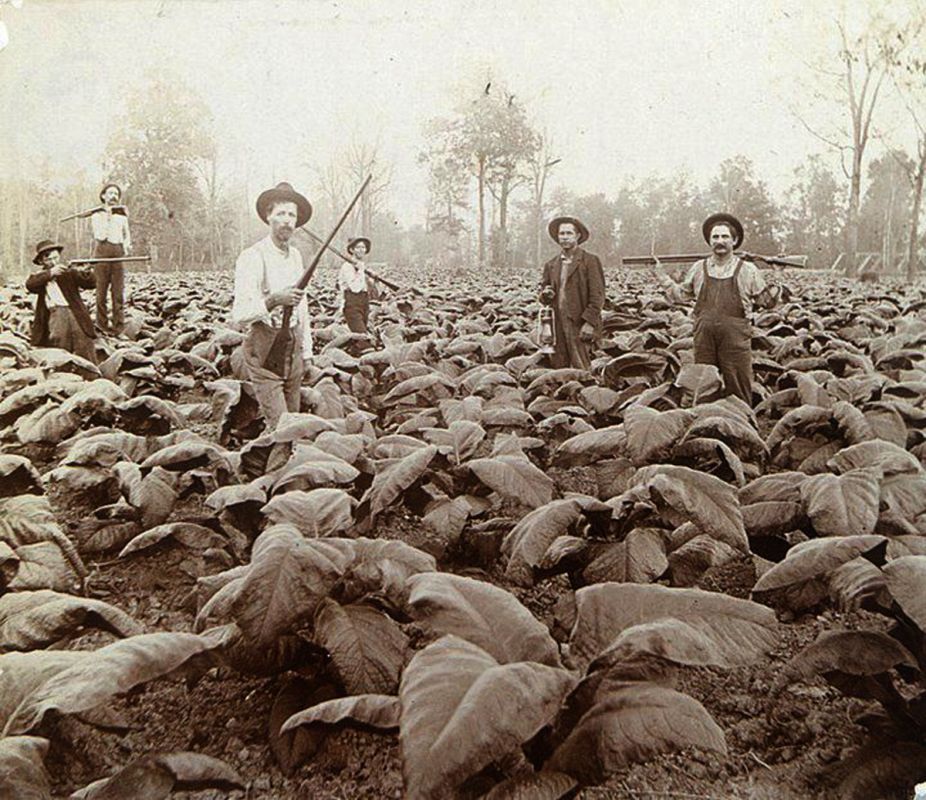
The “Tobacco Wars,” or Black Patch War, occurred in the Black Patch region of western Kentucky and Tennessee, including Sango, between 1904 and 1908, driven by American Tobacco Company (ATC) monopolistic pricing that devastated dark tobacco farmers. Farmers organized the Planters’ Protective Association (PPA) to resist the ATC, but when peaceful methods failed, vigilante groups known as Night Riders used intimidation and violence against non-compliant farmers and the ATC, leading to significant conflict and eventually the federal breakup of the ATC.
Causes of the Conflict
Monopolistic Practices:
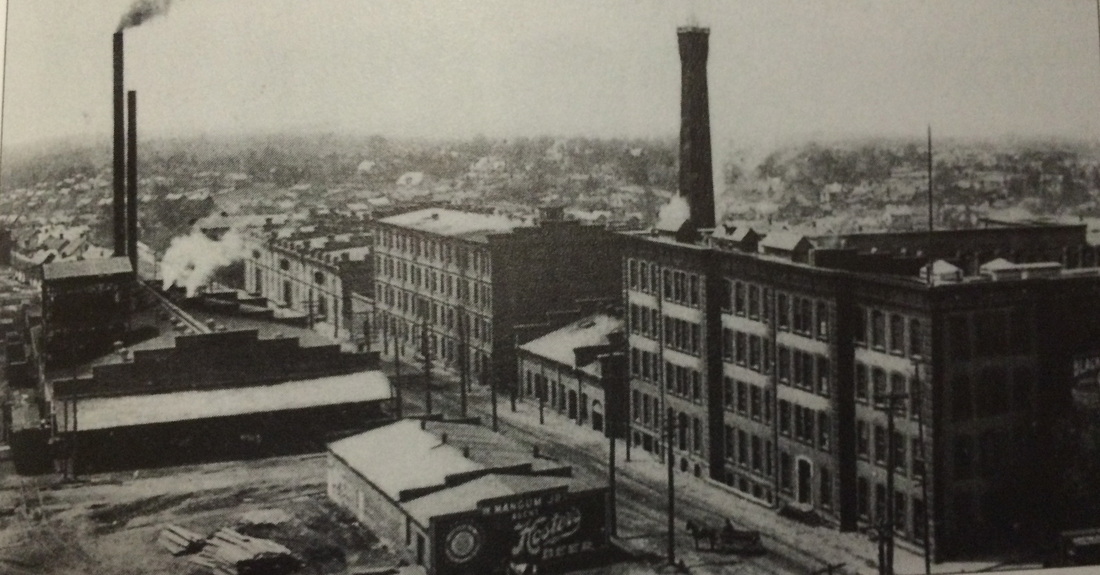
The American Tobacco Company (ATC), under James B. Duke, consolidated the industry, creating a monopoly that allowed them to set artificially low prices for dark tobacco, pushing farmers into financial ruin.
Economic Devastation:
Farmers in the Black Patch region, who already operated on thin margins, faced devastating economic impact, making it difficult to continue farming.
The Rise of the Night Riders
Farmer Organization:
In 1904, farmers formed the Planters’ Protective Association (PPA) to unify growers and negotiate for better prices.
Violent Tactics: When negotiations and boycotts proved ineffective, the PPA resorted to more drastic measures, forming the Night Riders, a vigilante group using intimidation, violence, and property destruction against farmers who did not comply with the association’s goals.
Notable Incident in Sango:
A key battle between the Night Riders and agents of the tobacco monopoly took place at the intersection of Bagwell and Sango Roads in Sango.
Resolution of the War
Antitrust Action:
The federal government’s antitrust investigation led to the breakup of the American Tobacco Company in 1911, creating a more competitive market.
Economic and Social Factors:
Improving economic conditions, crop diversification, and a decline in support for the Night Riders’ violent tactics also contributed to the end of the war.
Legacy
The Black Patch War is remembered as a significant period of conflict between farmers and corporate power in American history.
The struggle shaped communities and highlighted the ongoing fight for fair prices and against monopolies.